Coming Back Indoors After a Summer of Outdoor Climbing
Quick Answer: Coming back indoors after an outdoor season raises finger injury risk because gym holds concentrate load differently and indoor volume climbs much faster than outdoor volume. Give it three to four weeks of deliberately reduced intensity, prioritise a proper finger warm-up, and expect your grades to read lower indoors for reasons that have nothing to do with fitness.
The first indoor session back is famously humbling, and the second one is where people get hurt.
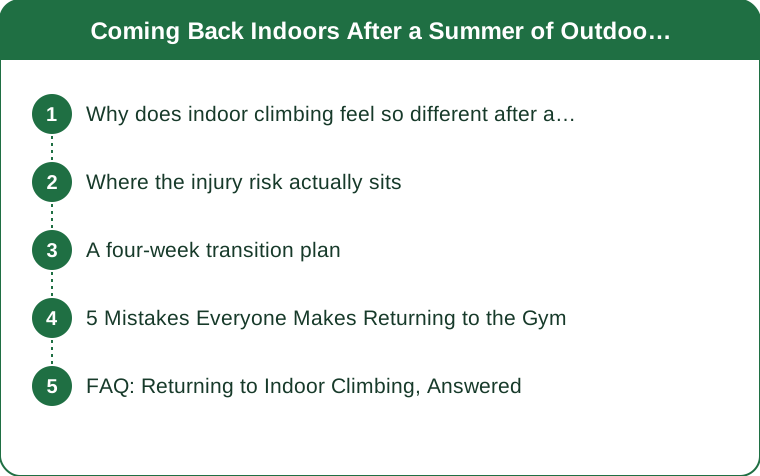
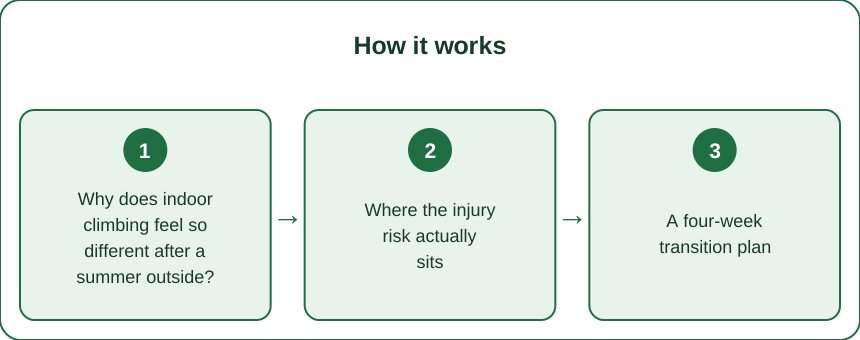
Why does indoor climbing feel so different after a summer outside?
Because the two disciplines load the hands and the movement system differently, even at the same nominal grade.
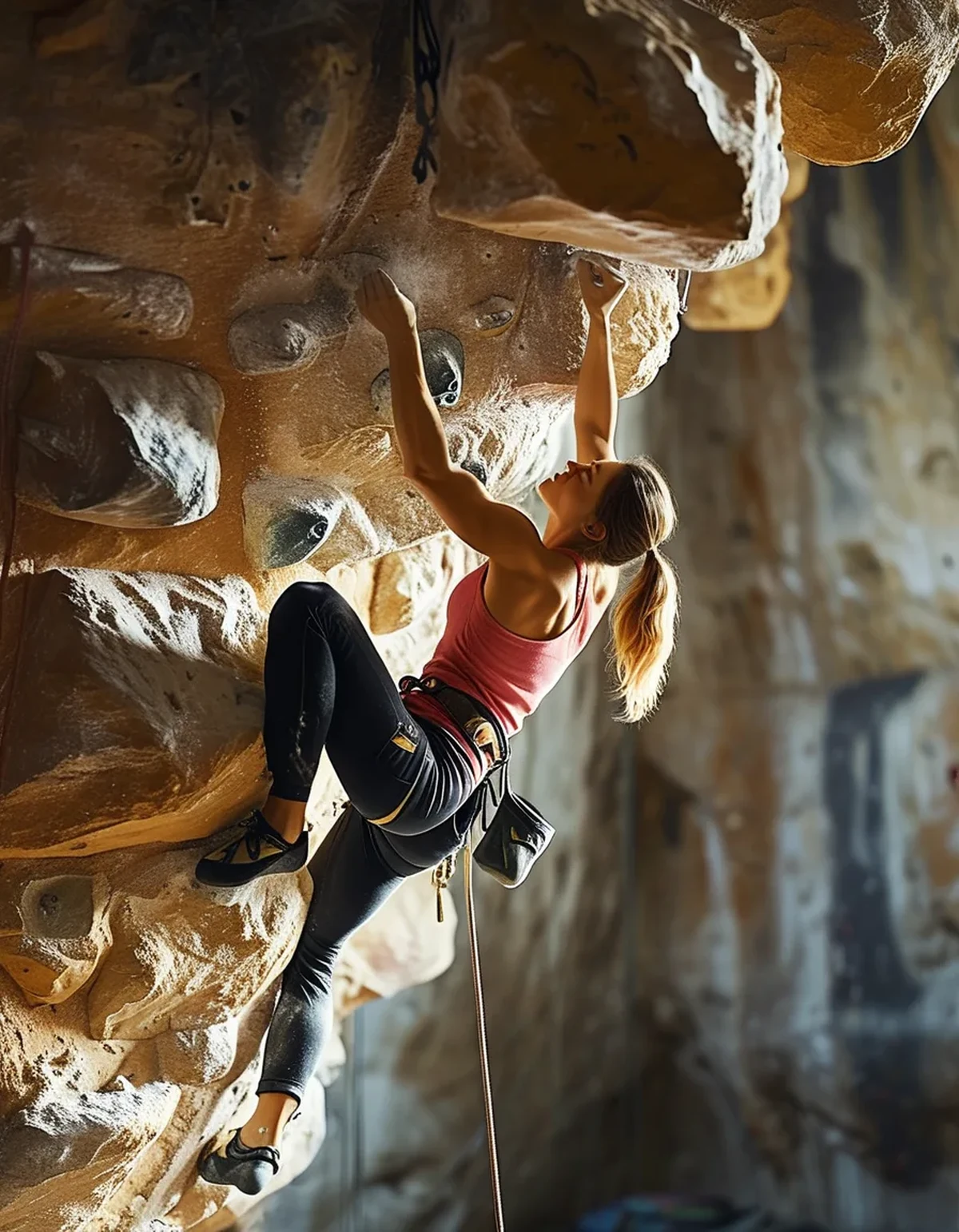
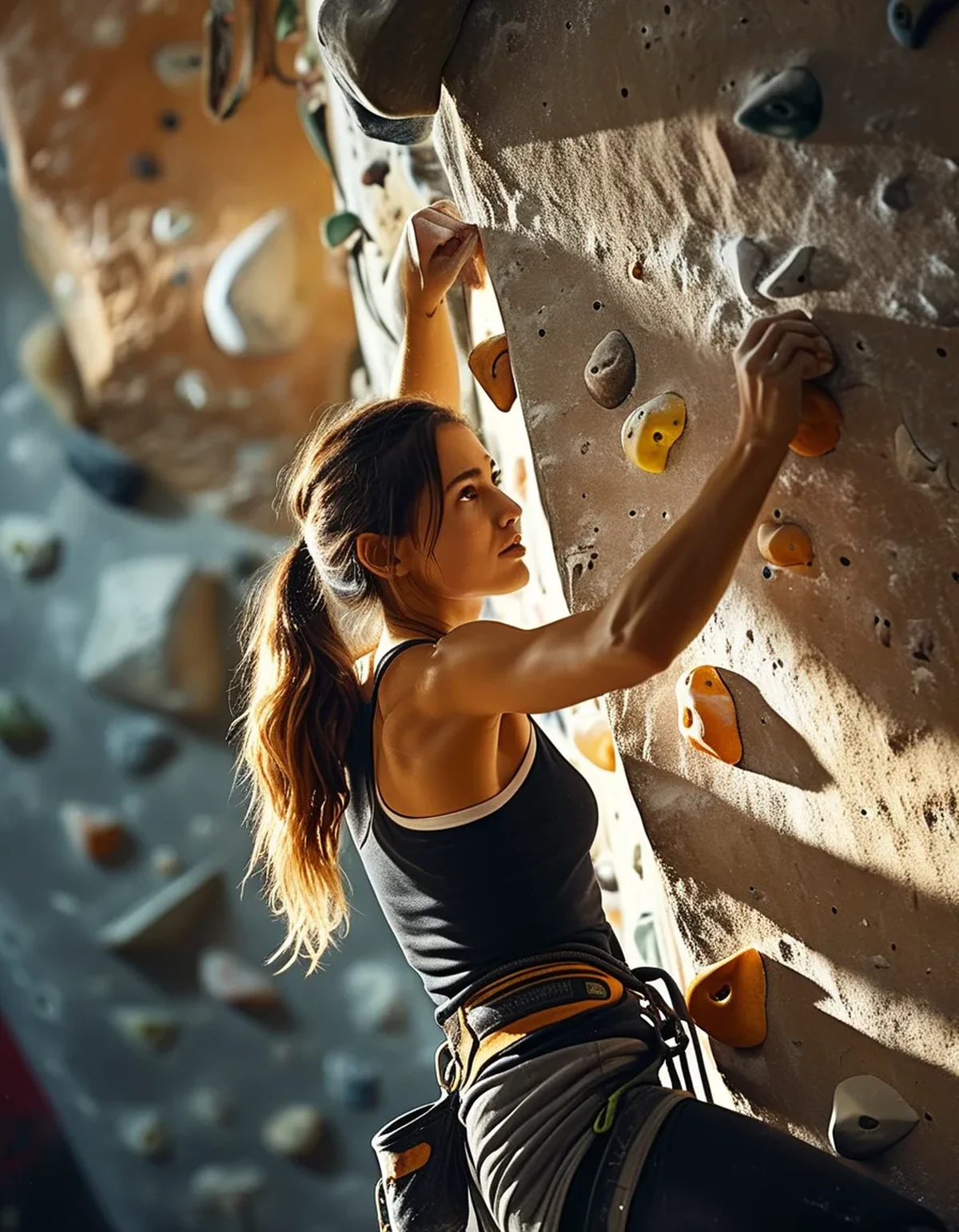
Hold type is the biggest single difference. Outdoor rock offers a huge variety of shapes, and hand position varies constantly. Indoor holds are manufactured, repeated, and set to demand specific grip positions - which means far more repetitions of the same loading pattern in a session.
Volume differs enormously. A day outdoors might involve a handful of routes with long rests and considerable time standing around. An indoor session can involve 20 to 40 problems in 90 minutes. The density of hard pulls is several times higher.
Movement style differs. Modern indoor setting favours dynamic, coordination-heavy movement on large volumes; outdoor climbing is often more static and footwork-dependent. Neither is better, but they train different things, and a summer of one leaves gaps in the other.
Friction and temperature. Gyms are warm, which reduces friction on both skin and rubber. Holds that felt secure on a cool crag feel greasy indoors, particularly in the first weeks before autumn cools the building.
What this means for how the first sessions feel:
- Grades read harder - a common experience and largely a style mismatch
- Skin fails faster, because indoor volume is higher and manufactured texture is abrasive
- Fingers feel it the next day more than after an outdoor day of similar effort
None of this indicates lost fitness. It indicates a different demand profile, and the adaptation takes a few weeks.
Where the injury risk actually sits
The transition window has a specific and well-known risk, and it is worth being blunt about it.
Finger injuries - particularly pulley strains - cluster around abrupt increases in load. The classic scenario is a strong climber returning to indoor volume and reaching for hard problems in week one, on tissue that has not seen that density of loading in months.
Why the tissue is behind: tendons and pulleys adapt more slowly than muscle. You can be strong enough to pull hard before the connective tissue is prepared to handle it repeatedly, and the gap is largest exactly after a change in training style.
The specific risk factors in this window:
- Full crimping on small edges early in a session or early in the transition
- Dynamic moves to small holds, where load arrives suddenly
- Session volume spikes - going from three outdoor routes a week to thirty indoor problems
- Skipping the warm-up because you are ‘just doing easy ones first’
A structured warm-up that meaningfully reduces risk:
- Five to ten minutes of general movement to raise temperature
- Ten minutes of easy climbing, well below your limit, on large holds
- Progressive loading on smaller holds - hangs or easy problems, building gradually
- Do not attempt anything near your limit for at least 20 minutes
Warning signs to respect:
- A pop or sharp pain in a finger - stop immediately and seek assessment
- Pain in a finger joint that persists between sessions
- Elbow pain, which is common in the transition and usually reflects a volume spike
This is general information, not medical advice. Finger and tendon injuries benefit substantially from early professional assessment, and climbing through them reliably makes them worse.
A four-week transition plan
The goal is to arrive at full indoor training in a month without an injury in between.
Week 1 - reacquaint, do not perform:
- Two sessions, 60 minutes each
- Nothing above about 70 percent of your outdoor limit grade
- Focus on hold types you have not touched all summer - slopers, pinches, volumes
- Stop while your skin is still fine. Skin is the honest limiter this week.
Week 2 - add volume, hold intensity:
- Two to three sessions
- More problems at the same moderate grade, rather than harder problems
- Introduce some dynamic movement, which is the biggest style gap for most outdoor climbers
Week 3 - add intensity carefully:
- Begin working problems near your limit, but only after a full warm-up and only in the first half of the session
- Cap the hard attempts. Five to eight quality attempts beats twenty tired ones, and tired attempts are where fingers get hurt.
Week 4 - normal training:
- Full sessions, normal intensity
- Add structured hangboard work only now, if it is part of your training, and start conservatively
Across all four weeks:
- Warm up properly every time, without exception
- Rest at least one day between climbing days
- Prioritise footwork drills, which is where outdoor climbers usually have an advantage worth keeping
- Manage skin - file glassy spots, moisturise on rest days, and stop before a flapper rather than after
On grades: expect to read one to two grades lower indoors initially. This is a style and hold-type effect and it resolves within a few weeks. Chasing your outdoor grade in week one is precisely the behaviour the injury statistics are built on.
5 Mistakes Everyone Makes Returning to the Gym
Mistake 1: Treating the first session as a test. Arriving to find out what grade you can still climb is the highest-risk possible way to start. The first session should feel easy and end early.
Mistake 2: Warming up on the wall only. Easy problems raise your general temperature but load fingers immediately. Add general movement first, and build finger loading progressively rather than starting on the wall cold.
Mistake 3: Matching outdoor session length. A four-hour day outside contains perhaps 40 minutes of climbing. Four hours in a gym is an entirely different load, and people apply the outdoor duration to the indoor density.
Mistake 4: Ignoring elbow niggles. Elbow tendinopathy is extremely common in this transition and it announces itself early. A mild ache that gets ignored for three weeks becomes a three-month problem. Reduce volume when it appears, not after.
Mistake 5 - the one that catches strong climbers: hangboarding straight away. Finger strength training on tissue that has just changed loading pattern is the highest-risk thing in the building. Wait three to four weeks, then start well below your previous loads.
FAQ: Returning to Indoor Climbing, Answered
Why do I climb worse indoors after a summer outside?
Different hold types, higher volume density, more dynamic setting and warmer conditions. It is a style mismatch rather than lost fitness, and it resolves in a few weeks.
How long before I am back to my normal indoor grade?
Usually three to four weeks of consistent sessions. Pushing that timeline is where finger injuries happen.
When can I start hangboarding again?
After three to four weeks of regular climbing, starting well below your previous loads. Connective tissue adapts more slowly than muscle, and this is the highest-risk training in the transition.
Why does my skin fail so fast indoors?
Indoor volume is far higher and manufactured texture is abrasive. Manage it actively - file glassy patches, moisturise on rest days, and stop before a flapper rather than after.
What should I do about elbow pain?
Reduce volume immediately and get it assessed if it persists more than a couple of weeks. Climbing through elbow tendinopathy reliably extends it - this is general information, not medical advice.
TL;DR:
- Indoor sessions contain several times the hard-pull density of an outdoor day
- Finger and pulley injuries cluster in the first weeks back, because tissue adapts slower than strength
- Expect to read one to two grades lower initially - it is hold type and style, not fitness
- Follow a four-week ramp: volume before intensity, and no hangboarding until week four
- Treat early elbow aches as a volume signal, not something to push through
The first session back should end while you still feel good. Everything that goes wrong in this transition goes wrong in weeks one and two.
Keep Reading
This article is for general informational and styling purposes only. Fit, sizing, and product availability may vary.