How to Tell When Your Climbing Shoes Actually Need a Resole (Not a Replacement)
Quick Answer: Resole climbing shoes when rubber wear exposes the midsole material at the edge or toe but before it reaches the rand — waiting past that point risks damage that makes resoling impossible and forces a full replacement instead.
Resoling a climbing shoe at the right time can double its usable life for a fraction of a new pair’s cost — but timing it wrong wastes that opportunity entirely in either direction.

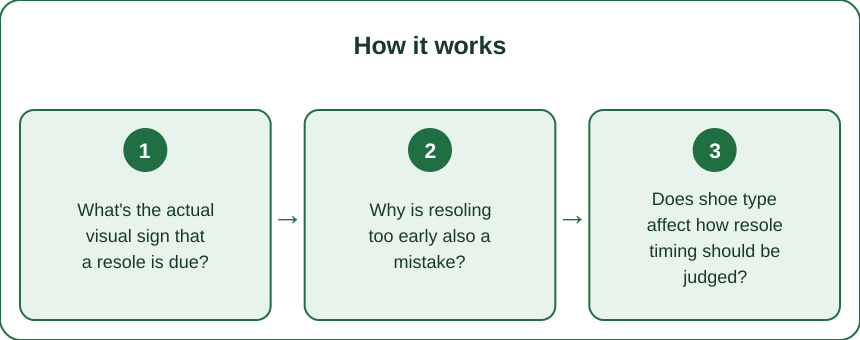
What’s the actual visual sign that a resole is due?
Look at the edge and toe area where rubber contacts rock most — when the outer rubber layer wears through to reveal the lighter midsole material underneath, that’s the signal to resole soon. Waiting until the wear reaches the rand (the rubber strip wrapping the shoe’s edge) risks the rand itself getting damaged, which complicates or prevents a clean resole.
Why is resoling too early also a mistake?
Resoling before the rubber is meaningfully worn wastes money on rubber that still had useful life left — most climbing shoes can handle noticeable visible wear on the outer sole layer well before actually needing new rubber, so replacing at the first sign of any wear is premature.

Does shoe type affect how resole timing should be judged?
Yes — aggressive, downturned shoes tend to wear unevenly at specific high-contact points (often the big toe area) and may need attention there specifically, while flatter all-around shoes tend to wear more evenly across the whole sole, which is easier to judge holistically.
5 Mistakes Climbers Make With Resole Timing
- Waiting until rubber wears into the rand, which can make a clean resole impossible.
- Resoling at the first visible scuff, wasting rubber that still had life left.
- Ignoring uneven wear patterns specific to aggressive shoe shapes.
- Not checking the toe area separately from the edge, since they often wear at different rates.
- Choosing a generic resole rubber instead of matching or upgrading based on climbing style, missing a chance to improve performance during the resole.
FAQ: Climbing Shoe Resole Questions, Answered
How many times can a climbing shoe typically be resoled?
Most shoes can handle two to four resoles before the upper itself wears out, assuming each resole happens before rand damage occurs.
Is it worth resoling with a different rubber than the original?
Often yes — resoling is a reasonable opportunity to switch to a stickier or more durable rubber compound based on what you’ve learned about your climbing style and typical terrain.
Should I resole both shoes at the same time even if one shows more wear?
Generally yes — resoling in pairs keeps the shoes performing consistently, since a meaningful difference in sole thickness between the two feet can subtly affect footwork feel.
TL;DR:
- Resole when rubber wears through to the midsole, before it reaches the rand
- Resoling too early wastes usable rubber life; too late risks rand damage
- Aggressive downturned shoes tend to wear unevenly at high-contact points
- Most shoes handle 2-4 resoles before the upper itself needs replacing
Check your most-used pair right now — if midsole material is visible at the toe or edge, it’s time to book a resole before it gets worse.
Keep Reading
This article is for general informational and styling purposes only. Fit, sizing, and product availability may vary.