Climbing Tape vs. Liquid Chalk: Which Actually Protects Your Skin Better?
Quick Answer: Tape and liquid chalk aren’t really competing solutions — tape physically protects skin from friction and existing tears during a session, while liquid chalk dries and toughens skin over repeated use, so most climbers benefit from liquid chalk as ongoing skin conditioning and tape specifically for protecting an already-compromised spot.
The tape-versus-chalk debate mostly comes from comparing two tools meant for different jobs rather than one being simply better than the other.
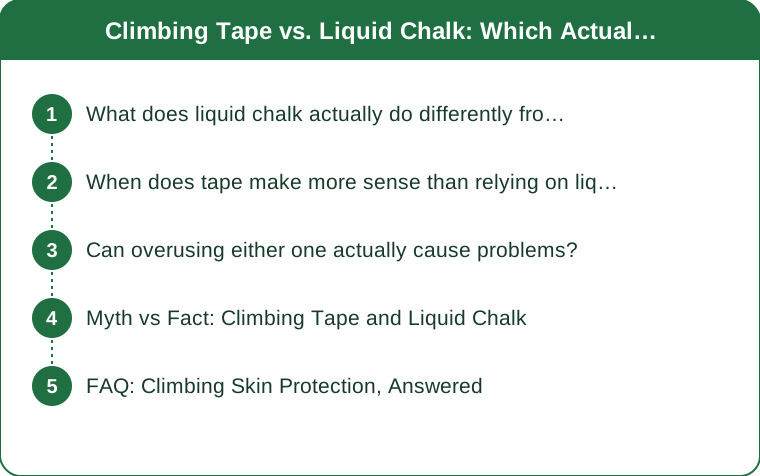
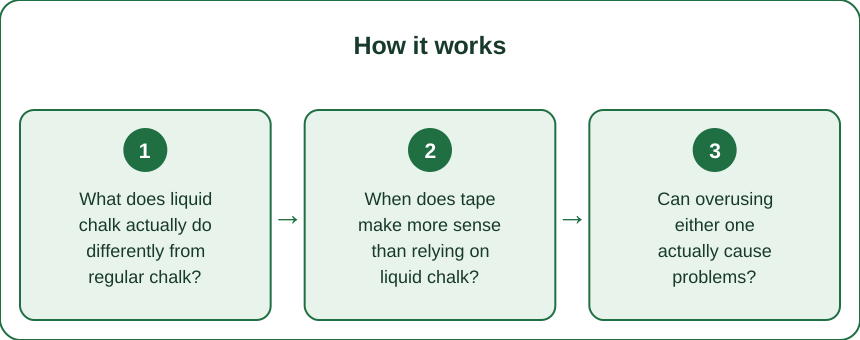
What does liquid chalk actually do differently from regular chalk?
Liquid chalk dries onto the skin and, with repeated use, gradually toughens the outer skin layer more than loose chalk does, since it stays on longer and provides more consistent coverage through a session rather than needing frequent reapplication.
When does tape make more sense than relying on liquid chalk?
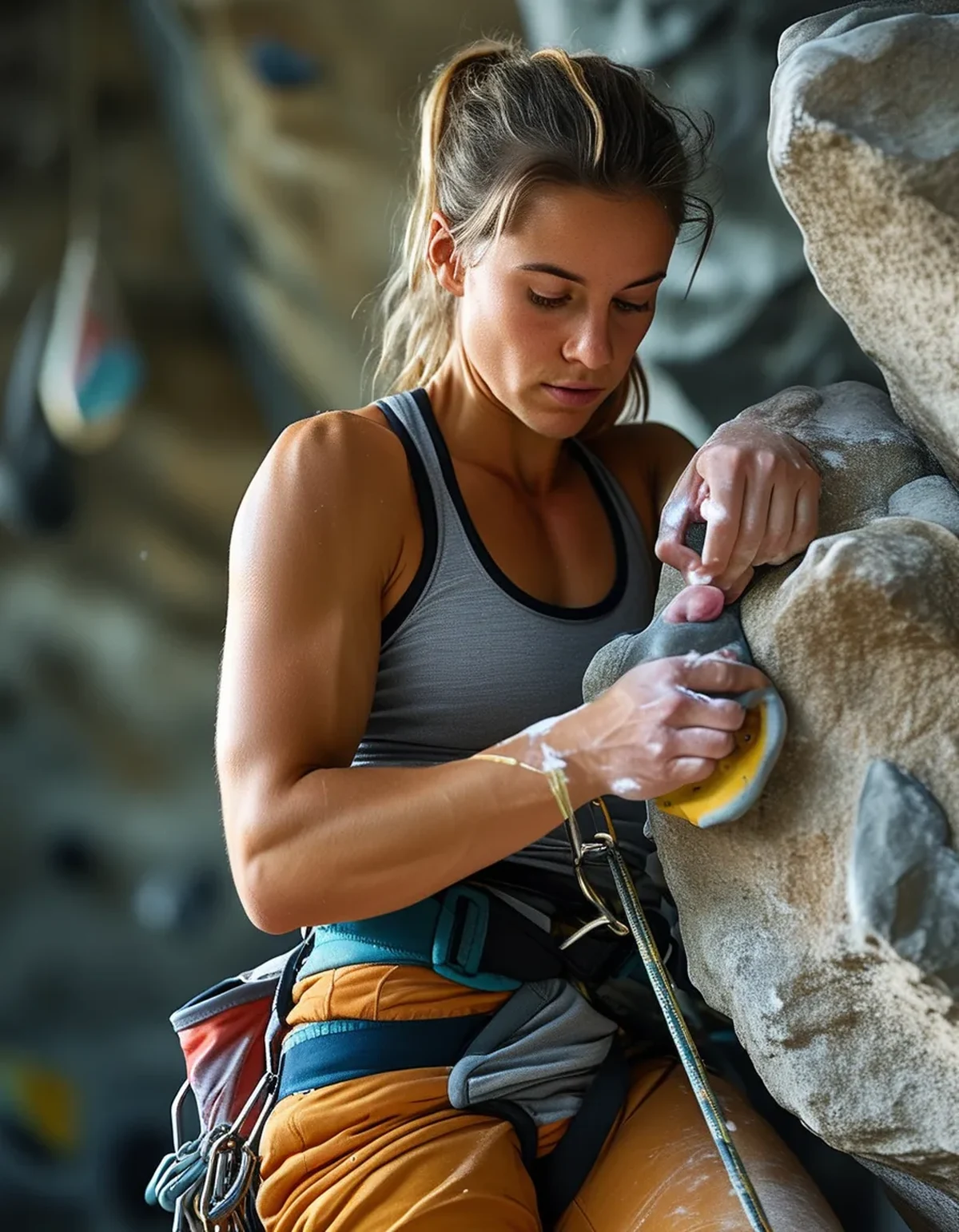
Tape is the better choice specifically for an existing flapper, split tip, or thin spot that needs direct physical protection during a session, since chalk alone doesn’t shield already-damaged skin the way a physical barrier does.
Can overusing either one actually cause problems?
Yes — over-taping healthy skin can actually prevent the natural toughening process that makes skin more climbing-resistant over time, and excessive liquid chalk use without enough recovery days can lead to excessive dryness and cracking. Both work best used situationally rather than as a constant default.
Myth vs Fact: Climbing Tape and Liquid Chalk
Myth: You should choose one or the other as your go-to skin protection method. Fact: They solve different problems — chalk for ongoing conditioning, tape for protecting a specific compromised spot.
Myth: More tape always means better protection. Fact: Over-taping healthy, uninjured skin can interfere with the natural toughening process that actually reduces injury risk over time.
FAQ: Climbing Skin Protection, Answered
How long does it take for liquid chalk conditioning to noticeably toughen skin?
Most climbers notice a difference in skin resilience after roughly 3-4 weeks of consistent use, though this varies with climbing frequency and individual skin type.
Is there a right way to tape a split tip specifically?
A common method wraps tape snugly around the affected area without restricting blood flow or grip feel too much, though technique varies by injury location and severity, and a physical therapist familiar with climbing injuries can help with recurring issues.
Should rest days include any skin care routine?
Yes, a light moisturizer (climbing-specific balms exist) on rest days helps prevent over-drying between sessions, particularly for climbers using liquid chalk frequently.
TL;DR:
- Liquid chalk and tape solve different problems — ongoing conditioning versus targeted protection
- Liquid chalk gradually toughens skin with repeated, consistent use over weeks
- Tape is best reserved for protecting an already-compromised spot, not as a constant default
- Overusing either (over-taping healthy skin, over-chalking without recovery) can work against skin health
Most climbers get the best results using both, situationally, rather than picking one as a permanent go-to solution.
Keep Reading
This article is for general informational and styling purposes only. Fit, sizing, and product availability may vary.