Why You Suddenly Climb Better When the Temperature Drops
Quick Answer: Cool dry conditions improve rock friction substantially, which is why climbers talk about sending temperature. The sweet spot for most rock is roughly 40-55F with low humidity - your skin sweats less, rubber performs better, and holds simply feel more positive. The catch is that cold reduces grip strength and finger tendon tolerance, so the same conditions that make you climb harder also raise the injury risk. Warm up considerably longer and don’t let a good session become a maximal one on cold fingers.
The problem you’ve been failing on all summer suddenly goes on the second try.
You didn’t get stronger overnight. The friction changed, and there’s a real mechanism behind it.

Why does cool weather actually improve climbing?
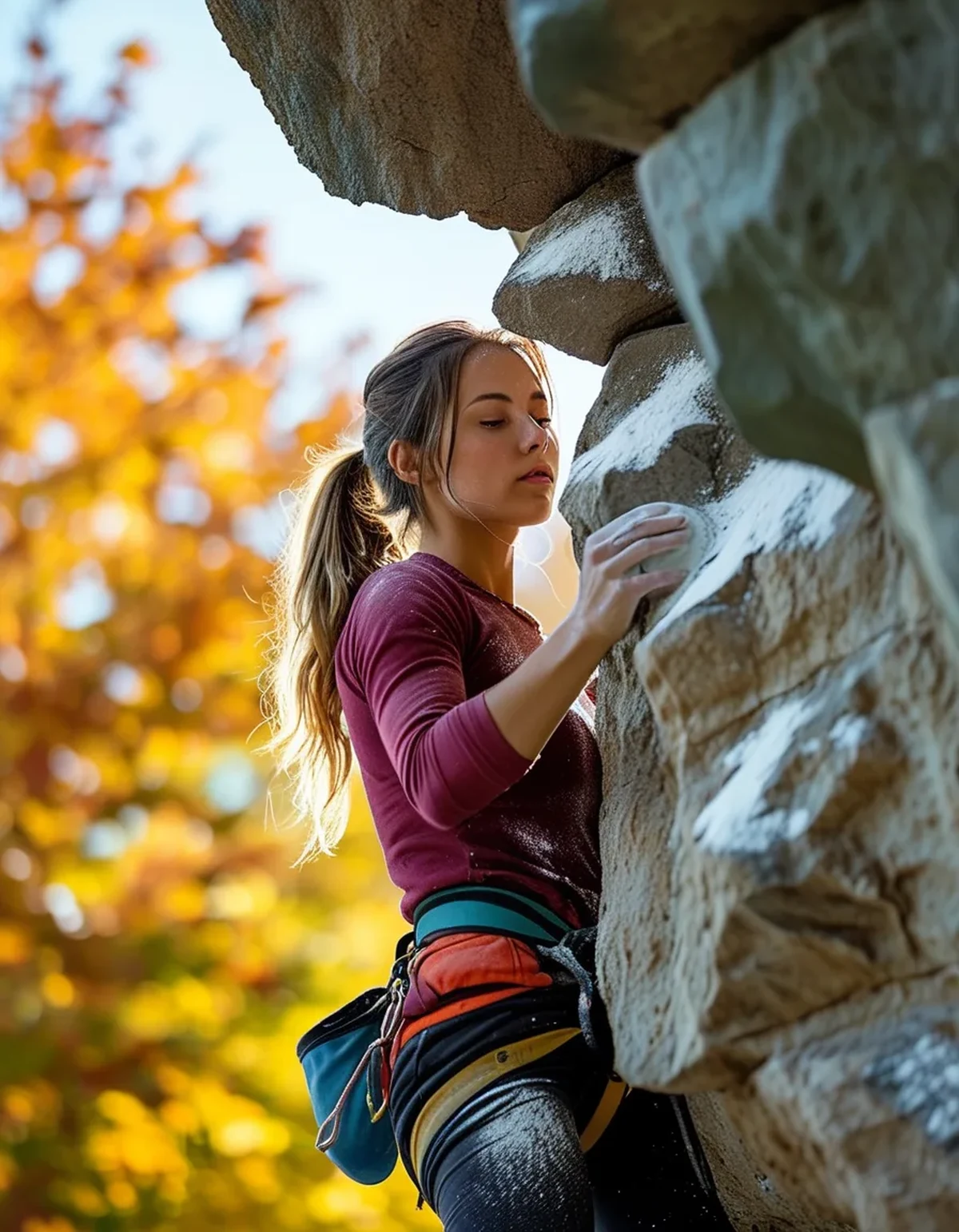
Three separate factors, all pointing the same direction.
Sweat is the main one. Even a thin film of moisture between skin and rock dramatically reduces friction. In warm conditions your hands sweat continuously, and no amount of chalk fully compensates for a hand that’s producing moisture faster than the chalk absorbs it.
Cool conditions reduce sweat production at the source, which is why the improvement feels like the holds themselves changed.
Rubber performs better cool, up to a point. Climbing shoe rubber softens as it warms. Soft rubber deforms and loses edging precision; cool rubber holds an edge better. There’s a lower limit - genuinely cold rubber gets hard and glassy - but the range from 40-55F is generally favourable.
Skin is firmer. Warm, hydrated skin deforms more under pressure and wears faster. Cool dry skin holds its shape on small holds, which is a large part of why crimps feel more positive.
Humidity matters as much as temperature. A dry 60F day often climbs better than a humid 45F one. If you only track one number, track the dew point - low dew point is what climbers are really chasing when they talk about conditions.
The realistic magnitude: most climbers find they can access roughly a grade more in good conditions than in poor ones. That’s a big effect, and it means summer grades and autumn grades aren’t directly comparable.
What’s the risk that comes with it?
The conditions that improve performance simultaneously increase injury exposure.
Cold reduces grip strength while feeling like it does the opposite. The holds feel better, so you pull harder, on tissue that’s less warm and less compliant. That combination is the specific mechanism behind autumn finger injuries.
Finger tendons and pulleys are the vulnerable structures. They have limited blood supply, warm slowly, and take a long time to heal. The A2 pulley is the most commonly injured structure in climbing and it’s most at risk on a hard crimp with cold fingers.
The dangerous session profile: arriving at the crag on a crisp morning, warming up briefly because it’s cold and standing around is unpleasant, then attempting the project you’ve been trying all summer. Best conditions of the year, worst preparation of the year.
Skin cracks in cool dry air. Dry skin is better for friction and more prone to splitting. A split tip ends a session and takes days to heal. Moisturise on rest days, file rather than let callouses build, and stop before the skin is genuinely worn through.
The trap in one sentence: the temptation to try your hardest is highest exactly when your tissues are least ready. The adjustment is a longer warm-up, not less ambition.
What does a proper cool-weather warm-up look like?
Roughly 25-30 minutes, in stages, and none of it optional.
Stage 1: General, 5-10 minutes. Brisk walking, arm swings, light jogging on the spot. The goal is raising core temperature before touching anything - fingers warm from the inside far more effectively than from rubbing them.
Stage 2: Hands and forearms, 3-5 minutes.
- Open and close fists rapidly, 30 reps
- Wrist circles, 15 each direction
- Finger extensions against a rubber band, 20 reps - trains the antagonists that climbing neglects
- Massage the forearms, 60 seconds each
Stage 3: Easy climbing, 10-15 minutes. Multiple problems or routes well below your limit, on big holds. This is where the tissue actually warms. Resist the urge to skip to something interesting - easy volume is the warm-up, not a formality.
Stage 4: Progressive loading, 5 minutes. Gradually smaller holds and harder moves. By the end you should have loaded a crimp at moderate intensity before attempting anything maximal.
Between attempts, stay warm. A 15-minute rest in cool air undoes much of the warm-up. Put a jacket on immediately, keep hands in pockets, and do a few easy moves before the next attempt if you’ve been sitting.
A useful rule for outdoor days: the colder it is, the more of your session is warm-up and the fewer maximal attempts you get. Three good attempts on warm fingers beat eight on cold ones, and the eight is how people get hurt.
What Nobody Tells You About Autumn Climbing Season
Five things that only become obvious after a season or two.
Your summer grades were suppressed, so autumn progress is partly illusory. Some of the jump is conditions rather than fitness. Compare like for like - this autumn to last autumn - or you’ll conclude you got dramatically stronger and then that you got weaker in June.
Skin management becomes the limiting factor. In good conditions, skin usually gives out before strength does. File callouses flat, moisturise on rest days, and stop while there’s skin left - people routinely end their best week of the year with destroyed tips on day two.
Rest days matter more, not less. The temptation is to climb every good-weather day. Tendons adapt more slowly than muscles, and a sudden increase in volume during a good stretch is a classic route to a finger injury. Two days on, one off, is a reasonable ceiling for most people during a good spell.
Shoes fit differently in the cold. Feet shrink slightly and rubber stiffens. A shoe that was painfully tight in August may fit well in October - which is worth knowing before you size your next pair in a heated shop in midsummer.
Chalk choice shifts with the conditions. Heavy chalk use that was necessary in humid summer conditions can over-dry skin in autumn, increasing the chance of splits. Use less than you did in July, and consider whether you need liquid chalk at all in genuinely dry conditions.
FAQ: Cool Weather Climbing Questions, Answered
What’s the ideal temperature for climbing?
Roughly 40-55F with low humidity for most rock types, and dew point matters as much as temperature. Below freezing, rubber hardens and skin sensation drops enough that performance falls off again.
How do I keep my fingers warm between attempts outdoors?
A jacket on immediately, hands in pockets, and a hand warmer in each pocket on cold days. Rewarm with movement rather than by blowing on them, and do a couple of easy moves before your next hard attempt.
Should I train harder because conditions are better?
Train the same and perform better. Increasing training load and taking advantage of good conditions at the same time is how finger injuries happen. Let the conditions give you the sends; keep the training load where it was.
Why does my skin split more in autumn?
Dry air plus dry skin plus better friction means more force through less pliable skin. Moisturise on rest days, file callouses flat rather than letting them build, and use less chalk than in summer.
Is it worth climbing outdoors in the cold or should I stay in the gym?
Both, with different purposes. Outdoor sessions in good conditions are for performance; gym sessions are for volume and training. Trying to do maximal outdoor performance and high training volume in the same week is where people run into trouble.
TL;DR:
- Cool dry air reduces hand sweat, firms skin, and improves rubber performance - roughly a grade’s worth for many climbers
- Dew point matters as much as temperature; a dry 60F day beats a humid 45F one
- The same conditions reduce grip strength and finger tendon tolerance, which is why autumn is finger injury season
- Warm up 25-30 minutes in stages, and stay warm between attempts
- Three attempts on warm fingers beat eight on cold ones
- Skin becomes the limiting factor - use less chalk than in summer and file callouses flat
The rock got grippier, not you. Warm up like you know that.
Keep Reading
This article is for general informational and styling purposes only. Fit, sizing, and product availability may vary.