Why Your Fingers Hurt More Once the Climbing Gym Gets Cold
Quick Answer: Cold air improves rubber and skin friction, so holds feel better and you pull harder — while cold tendons and pulleys are less compliant and less well supplied with blood. Better grip plus stiffer tissue is exactly the combination that produces finger injuries, and it is why pulley strains cluster in the first cold weeks of autumn.
The gym feels amazing. Everything is sticking. You are sending things you could not touch in August.
And your ring finger has started complaining at the base.
These two facts are the same fact.
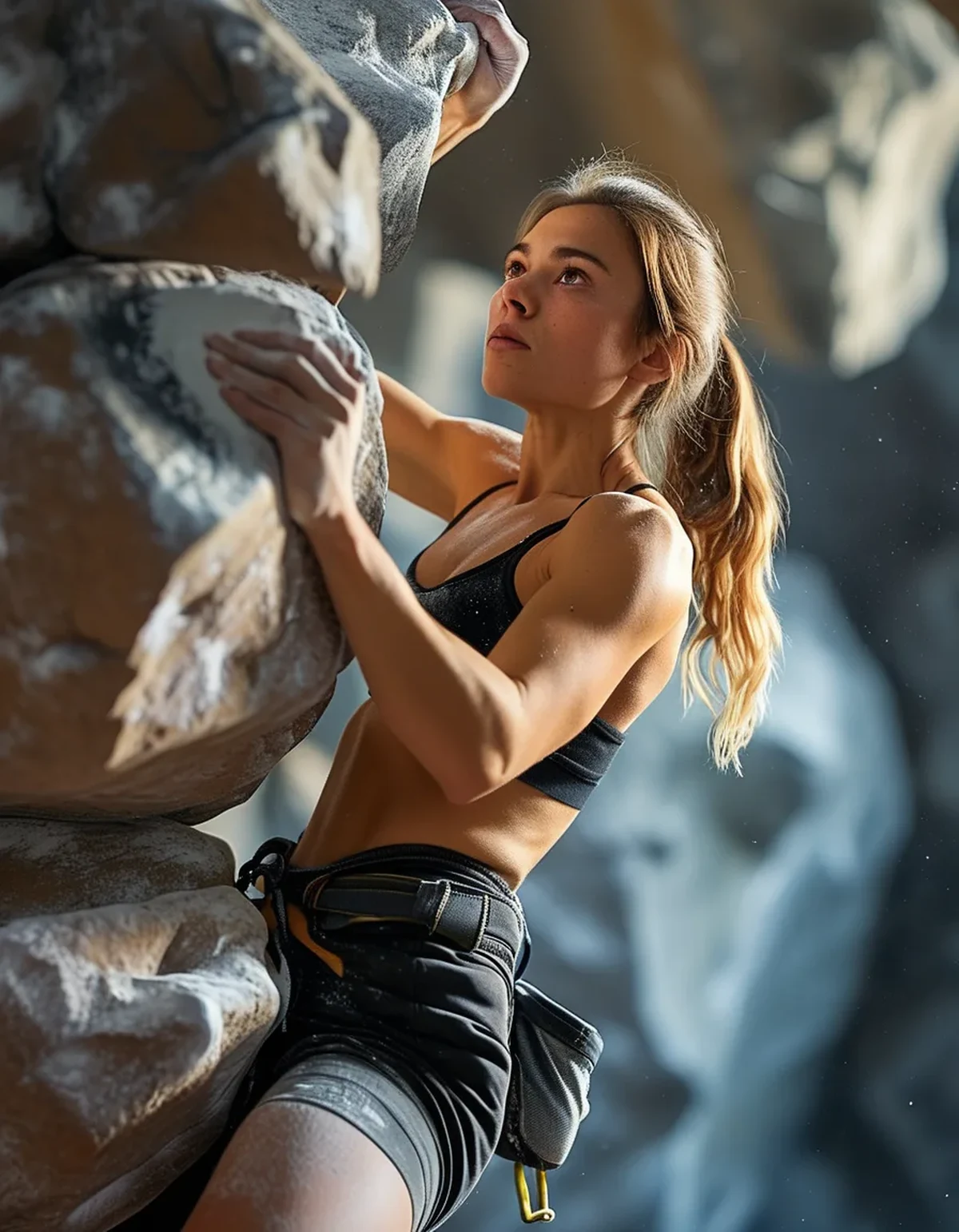
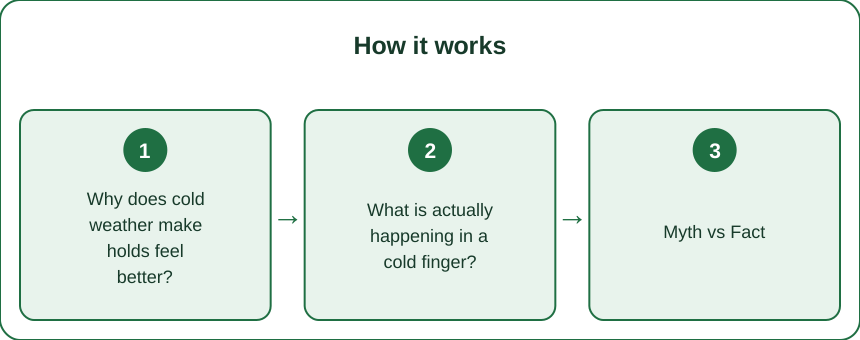
Why does cold weather make holds feel better?
Three separate effects, all pointing the same direction.
Rubber performs better cold. Climbing shoe rubber is softer and stickier at lower temperatures within a usable range. It deforms into the texture of the hold more readily and resists sliding better. Below roughly freezing this reverses and rubber goes hard, but a 60-degree gym is well inside the good range.
Skin sweats less. Sweat is the main enemy of friction on rock and plastic. Cooler, drier air means dramatically less moisture at the skin-hold interface. Skin also firms up slightly, which improves edge contact.
Air is drier. Lower absolute humidity means less moisture on the holds themselves. In a busy humid summer gym, holds acquire a film of moisture and chalk paste that measurably reduces friction.
Combined, these can make a route feel a full grade easier than the same route in August. That is a real change in the physics, not a psychological effect.
The problem is that your maximum pulling force has gone up while your tissue tolerance has not. Grip strength is largely limited by how much force you can apply before the hold slips. Remove the slipping, and you apply considerably more force to the same finger structures.
What is actually happening in a cold finger?
Your fingers have almost no muscle in them — the muscles that move them sit in the forearm, connected by long tendons running through a series of pulleys that hold them against the bone. Those pulleys are the classic climbing injury site, particularly the A2 pulley at the base of the finger.
Cold affects this system in several ways at once:
Peripheral blood flow drops. In cold conditions the body constricts blood vessels in the extremities to conserve core heat. Less blood means less delivery to tissue that already has a poor blood supply — tendons and pulleys are among the least vascular structures in the body.
Tissue becomes less compliant. Collagen-based structures are stiffer at lower temperatures. A stiffer pulley absorbs less of a sudden load and transmits more of it directly.
Sensation is reduced. Cold fingers give you less feedback. The small warning signals that would normally make you release a hold are muted, so you hold on through loads you would otherwise abandon.
Warm-up effects fade faster. In a warm gym, tissue stays warm between attempts. In a cold one, five minutes of resting between burns takes you most of the way back to cold.
That last point explains the specific injury pattern: most cold-weather finger injuries happen on a hard attempt after a long rest, not at the start of a session and not during continuous climbing.
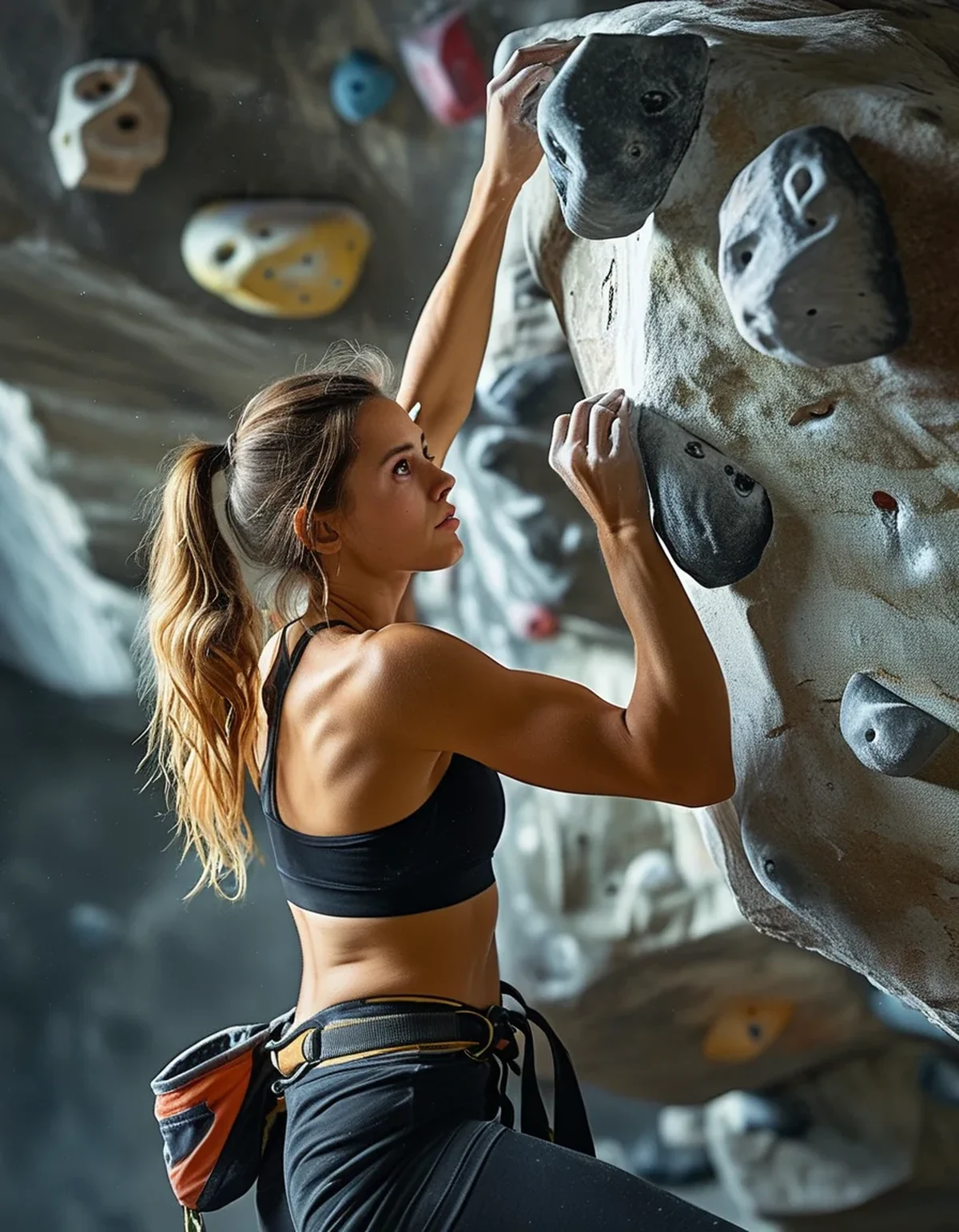
Myth vs Fact: Cold and Climbing
Myth: Colder is always better for performance. Fact: There is an optimum, usually somewhere around 45 to 60 degrees for outdoor rock. Below that, fingers go numb, rubber hardens, and the friction gain is outweighed by loss of sensation and power.
Myth: If your fingers are warm, you are warmed up. Fact: Warm skin is not warm tendon. Surface temperature responds within minutes; deep tissue takes considerably longer. This is why a warm-up needs progressive loading rather than just time.
Myth: Pulley injuries always announce themselves with a pop. Fact: A loud pop indicates a significant rupture, but most pulley injuries are gradual strains that present as a dull ache at the base of the finger that worsens over sessions. Waiting for a pop means waiting past the point where rest would have fixed it.
Myth: Taping prevents pulley injuries. Fact: The evidence for prophylactic taping preventing injury is weak. Taping is genuinely useful for supporting a healing injury and for feedback, but it does not license harder crimping.
Myth: Warming up on hard problems is fine if you feel good. Fact: Feeling good is exactly the trap in autumn, because the improved friction makes you feel good before your tissue is ready. Progressive loading regardless of how you feel is the whole point.
How do I climb through the cold season without getting hurt?
Warm up longer than in summer — twenty minutes minimum. General movement first to raise core temperature, then easy climbing, then progressively harder. The last part matters most: your hardest warm-up problem should be within two grades of your working level before you touch anything at your limit.
Keep hands warm between attempts. Pockets, a jacket, or a warm drink. This is the single most effective in-session habit, because the long rests are where you go cold without noticing.
Open-hand grip more, full crimp less. Full crimping loads the A2 pulley far more than an open-hand or half-crimp position. In the first cold weeks, deliberately biasing toward open-hand reduces the peak load on the structure most at risk.
Add a session-limit rule for hard attempts. Injuries cluster late in a session when tissue is fatigued and you are chasing one more go. Decide the number of limit attempts before you start.
Respect any ache at the base of a finger. Dull pain there is the early signal of pulley strain. Two weeks of easy climbing at that stage is the whole treatment. Ignoring it for two weeks turns it into a two-to-three-month problem.
Build in a deload week. Autumn brings a natural surge in training volume as outdoor season ends and indoor season begins. That surge is the second half of the injury story — the friction gets you pulling harder and the schedule gets you pulling more often. Plan an easier week every fourth week rather than waiting for a forced one.
This is general information rather than medical advice — persistent finger pain, swelling, or any loss of function should be assessed by a physiotherapist familiar with climbing injuries.
FAQ: Cold Climbing Questions, Answered
Should I use hand warmers between attempts?
They work well and are widely used. The aim is keeping tissue warm rather than heating cold tissue quickly, so use them throughout rather than only when your hands are already numb.
Is it worth climbing outside in the cold if the gym is warmer?
Outdoor autumn conditions are genuinely the best of the year for friction, which is why the season exists. Just apply the same rules more strictly, since outdoor sessions involve longer rests and colder belays.
How do I tell a pulley strain from general soreness?
Pulley issues localise to a specific point at the base of a finger, hurt when crimping specifically, and often feel worse the day after. General soreness spreads through the forearm and hand and eases with movement.
TL;DR:
- Cold improves rubber, skin, and hold friction, which lets you apply more force than usual
- Cold tendons and pulleys are stiffer, less well supplied with blood, and give less feedback
- Injuries cluster on hard attempts after long rests, not at the start of sessions
- Warm up for twenty minutes with progressive loading, and keep hands warm between burns
- Bias toward open-hand grips in the first cold weeks and cap your limit attempts
- A dull ache at the base of a finger means two weeks easy now, or three months later
Autumn hands you a grade for free. The cost is that your fingers are being asked to hold loads they have not been prepared for, in tissue that is stiffer than it was in August — take the grade, but warm up like you have not earned it yet.
Keep Reading
This article is for general informational and styling purposes only. Fit, sizing, and product availability may vary.