Why You're Stuck at the Same Climbing Grade (and It's Probably Not Strength)
Quick Answer: Most climbing plateaus aren’t a strength problem — they’re a footwork and fear problem. Climbers who plateau tend to over-rely on arm strength and under-use their legs, and to grip harder out of fear of falling rather than trusting their feet. Fixing footwork and practicing controlled falls usually breaks the plateau faster than more hangboard training.
You’ve been stuck at the same grade for three months. You’ve added hangboard sessions, you’ve gotten stronger — and the grade still won’t budge. The problem almost never lives in your fingers. It lives in your feet and your nervous system’s relationship with falling.
Why does more finger strength stop helping at a certain point?
Because past a baseline level, grip strength stops being the limiting factor for most climbers — technique and fear management become the bottleneck instead. You can hangboard your way to stronger fingers for months and still fail the same moves, because the moves were never about raw grip in the first place.
Climbing With Your Legs, Not Your Arms
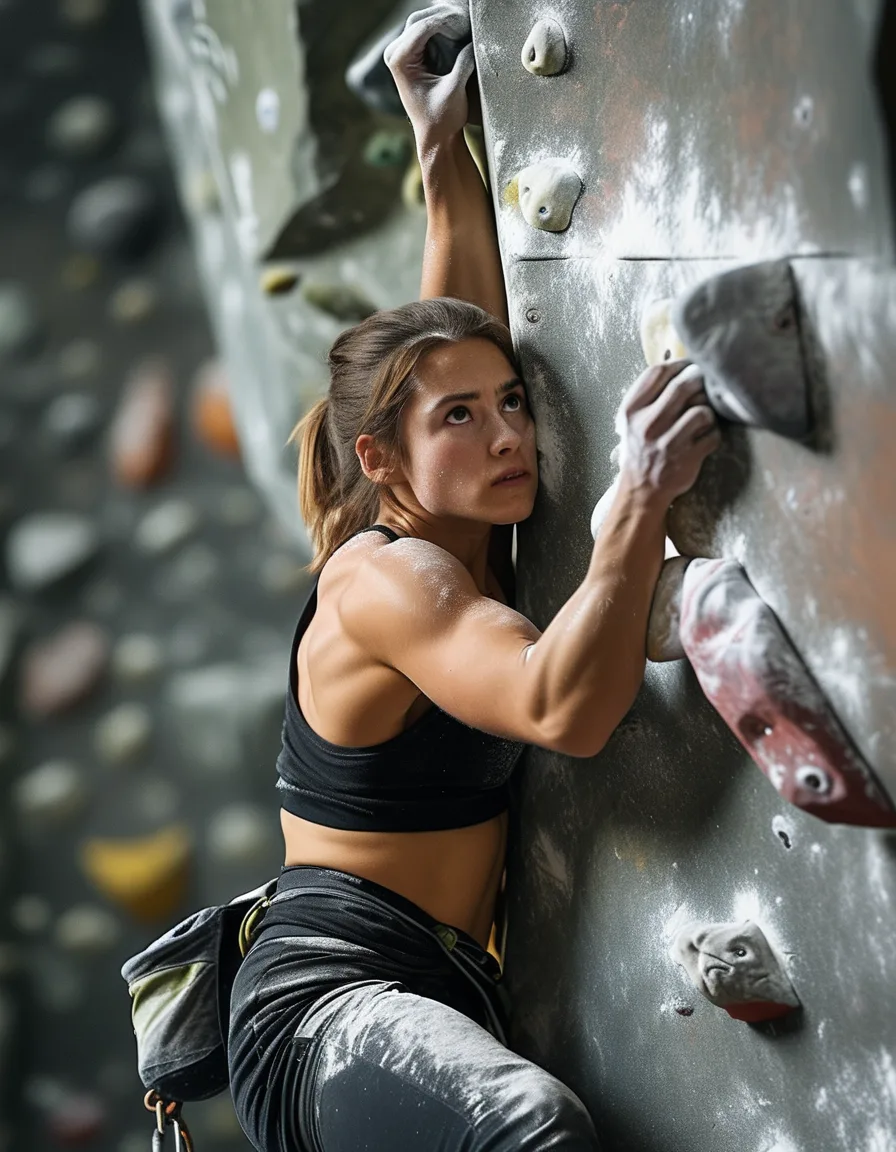
Beginners and plateaued intermediates share the same habit: pulling with the arms when the legs should be doing the pushing. Your legs are dramatically stronger than your arms — every move where you’re hauling yourself up by the arms instead of pushing off a foothold is burning strength you don’t need to burn. Watch your own climbing video: if your arms are bent and straining while a foothold sits unused nearby, that’s the pattern to break.
How does fear of falling actually block progress?
Grip tightening isn’t really about the hold — it’s a fear response. When you’re scared of falling, you over-grip, which fatigues your forearms faster and makes the fall (when it inevitably comes) less controlled, not more. Deliberately practicing falls in a safe, low-height setting retrains this response over a few sessions, and climbers often report the plateau move suddenly feeling possible once the fear response calms down.
What does footwork training actually look like?
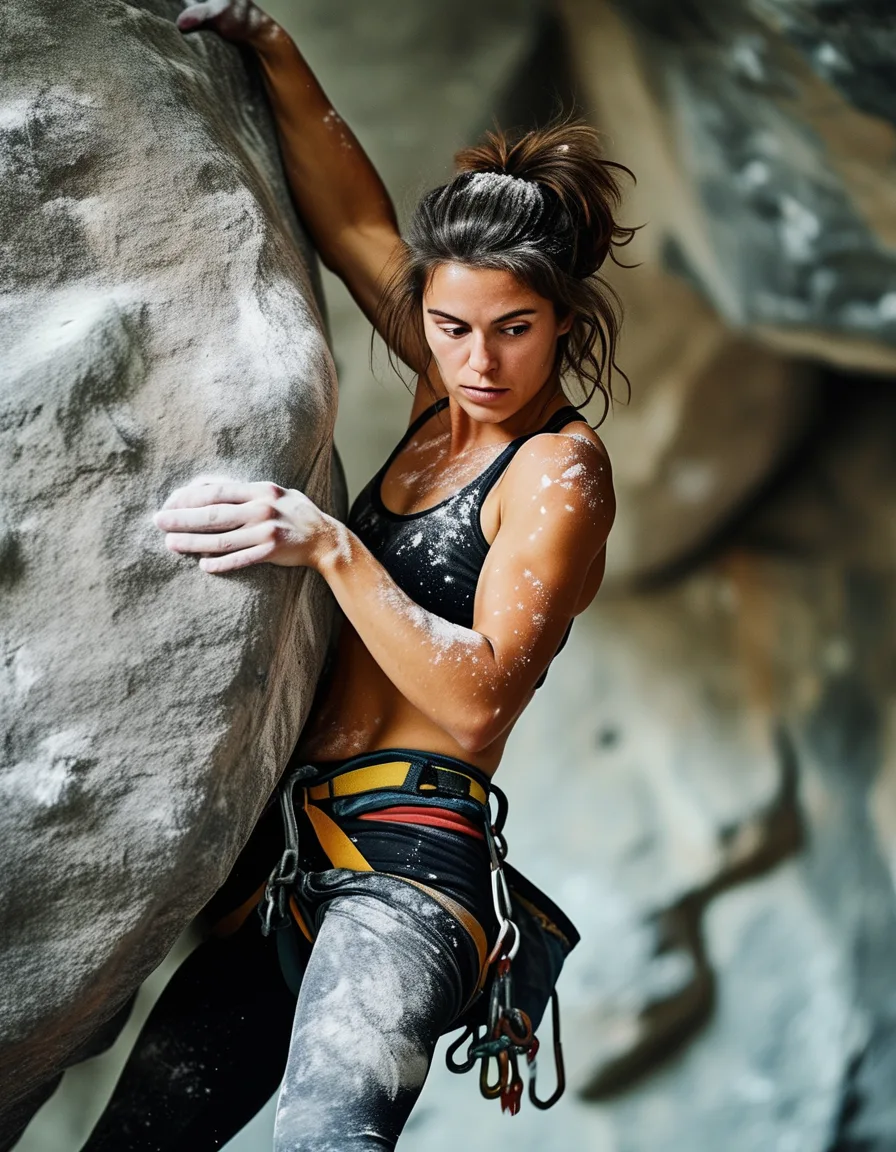
Spend one full session climbing routes 2 grades below your limit using only quiet, precise foot placements — no smearing, no kicking around for a foothold, every foot placement deliberate and silent. This single constraint rewires the automatic habit of relying on arms, and most climbers notice their limit grade feels easier within 2-3 sessions of this drill.
Myth vs Fact: Climbing Plateaus
Myth: A plateau means you need to train harder. Fact: A plateau more often means you need to train differently — technique-focused sessions below your limit grade break more plateaus than harder sessions at your limit.
Myth: Fingerboard training is the fastest way through a plateau. Fact: For most climbers below advanced levels, footwork and fall practice unstick a plateau faster than added finger training, which has a slower return and higher injury risk if overdone.
What Nobody Tells You About Breaking Through
The move that’s blocking you rarely gets easier because you got stronger. It gets easier because you finally trust your feet enough to commit your weight to them — that’s a nervous-system change, not a muscle change, which is why strength training alone so often fails to move the needle.
FAQ: Climbing Plateau Questions, Answered
How long does a typical climbing plateau last?
Without a technique intervention, plateaus commonly last 2-6 months; with a dedicated footwork-focused session or two, many climbers break through within 2-3 weeks.
Should I stop hangboard training if I’m plateaued?
Not necessarily stop, but deprioritize it — 1-2 short sessions a week is plenty while you focus the bulk of your climbing time on footwork and controlled falling practice.
Is fear of falling something every climber deals with?
Yes, at every level — it doesn’t fully go away, but it becomes more manageable with deliberate, low-stakes practice rather than avoidance.
TL;DR:
- Most climbing plateaus are footwork and fear problems, not strength problems
- Practice one full session using only quiet, precise foot placements below your limit grade
- Deliberately practice controlled falls to retrain the over-gripping fear response
- Deprioritize hangboard time temporarily and focus reps on technique instead
The grade that’s had you stuck for months usually falls to trust, not to another month of training harder.
Keep Reading
This article is for general informational and styling purposes only. Fit, sizing, and product availability may vary.