Climbing Skin Care Between Sessions: Why Your Fingertips Determine Your Next Session More Than Your Training Does
Quick Answer: Skin usually fails before strength does. It also recovers on its own timeline, independent of muscles — which is what actually caps sustainable session frequency. File calluses smooth, moisturize on rest days only, tape known weak spots preemptively, and let skin condition override a muscle-ready signal.
You planned four hard boulder problems. You got through one and a half before a flapper ended the evening at 7:40pm.
Your forearms were fine. Your fingers had plenty left. A patch of skin roughly the size of a lentil made the decision for everyone.

Why is finger skin such an underrated limiter?
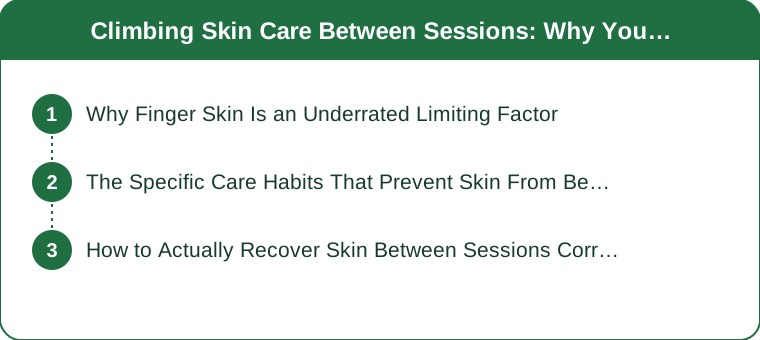
It fails first. For newer and high-volume climbers especially, fingertip condition often becomes the binding constraint well before grip strength or technique genuinely run out.
Failure is abrupt. A significant tear ends a session instantly regardless of how much capacity remained. Muscular fatigue gives you warning; skin doesn’t.
It recovers on a different clock. Skin has its own recovery window that doesn’t necessarily align with how fast muscles and energy systems bounce back — which creates a genuine mismatch in training frequency.
Over-care is also a problem. Over-filing or over-moisturizing produces skin that’s too soft or too thin. This is a calibration skill, not a “more attention is better” situation.
So true sustainable training frequency is capped by skin recovery capacity as much as by muscular recovery. That’s worth planning around rather than discovering mid-session.
What daily habits keep skin from becoming the bottleneck?
- File calluses to a smooth, moderate thickness. Thick uneven edges are what catch and tear. Smooth and level, not gone entirely.
- Moisturize on rest days and after sessions — not before. Heavy moisturizing right before climbing compromises grip and friction, which is its own hazard.
- Treat problem spots specifically. A targeted balm on a recurring crease or pad beats treating every fingertip identically.
- Tape preemptively. Apply to a known thin or previously torn spot before a high-friction session rather than reacting after damage.
- Track skin as data. Note thickness and recovery state the same way you’d note grip strength or send rate. It’s training information, not an afterthought.

What Nobody Tells You
Humidity beats every product you own. Skin behaves completely differently at 40% versus 70% humidity, and no balm compensates. On humid days, chalk strategy matters more than skin prep.
Filing is for the day after, not the day of. Filing right before a session removes the surface layer you were about to climb on. Do it in the evening after climbing so it smooths and reseals overnight.
The best climbers file more than they moisturize. Newer climbers reach for balm and skip the file. It’s usually backwards — uneven callus edges cause far more tears than dry skin does.
Liquid chalk is drying by design. That’s the point, and it’s also why back-to-back sessions using it need more rest-day moisturizing to compensate. Our tape versus liquid chalk comparison covers the trade-off.
Skin thickness peaks and then plateaus. After a few months of consistent climbing, you’re not going to keep getting tougher. From there it’s management, not adaptation.
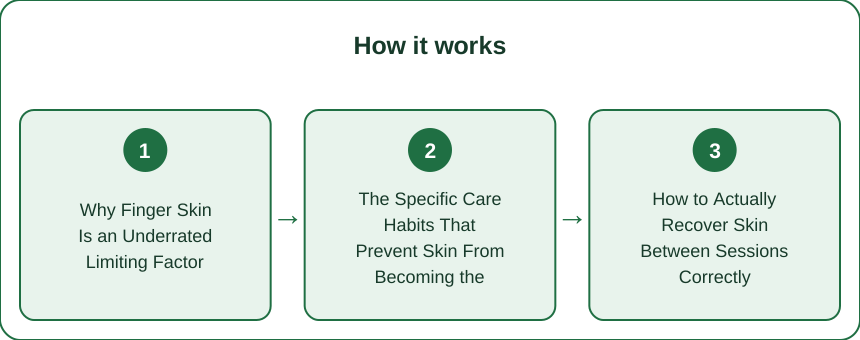
How do you actually recover skin between sessions?
Give real tears real time. A genuine tear needs days of reduced friction to heal properly. Masking it and continuing to climb extends the problem rather than solving it.
Let skin override a muscle-ready signal. Sometimes you extend a rest day because your fingertips aren’t ready even though everything else is. The two systems don’t share a timeline, and rest days are already underrated.
Use a purpose-built repair balm. During rest windows specifically, something formulated to support skin barrier repair beats a generic hand cream.
Be gentle after sessions. Hot water and harsh soap strip natural oils exactly when skin is already compromised. Lukewarm water and a mild cleanser.
Plan frequency around actual capacity. Be honest about how many sessions per week your skin currently sustains, and set the schedule to that rather than to an aspirational number.
When to see a professional: a split that keeps reopening, any wound showing redness spreading outward, warmth, swelling, or pus needs a doctor — infected hands are not something to manage with tape. Deep cracks that won’t close, or persistent finger joint or tendon pain (a different problem from skin), also warrant a physician or physical therapist rather than more balm.
FAQ
How long does a flapper take to heal?
Typically several days to about a week before it tolerates real friction again, depending on depth and where it sits. Trim the loose flap cleanly rather than tearing it, keep it covered early, and resist testing it a day too soon — that’s how a week becomes three.
Should I climb with tape over a tear?
For a small, clean, healing tear, taped climbing at reduced intensity is often reasonable. For a fresh or deep one, tape mostly hides the damage while it gets worse. Our hand care guide covers when each applies.
Do I need a dedicated climbing salve?
Not strictly — a simple unscented moisturizer covers most needs. Dedicated balms tend to be formulated for faster barrier repair without leaving skin too soft, which is genuinely useful if you’re climbing three or more times a week.
TL;DR:
- Skin often fails before strength, and it fails abruptly rather than gradually.
- Skin recovery runs on its own clock — it, not muscle recovery, frequently caps session frequency.
- File calluses smooth and level; do it after sessions, not before.
- Moisturize on rest days only; heavy balm before climbing kills friction.
- Tape known weak spots preemptively and track skin condition as training data.
- Let skin override a muscle-ready signal. Spreading redness, warmth, swelling, or pus means see a doctor.
Keep Reading
This article is for general informational and styling purposes only. Fit, sizing, and product availability may vary.